
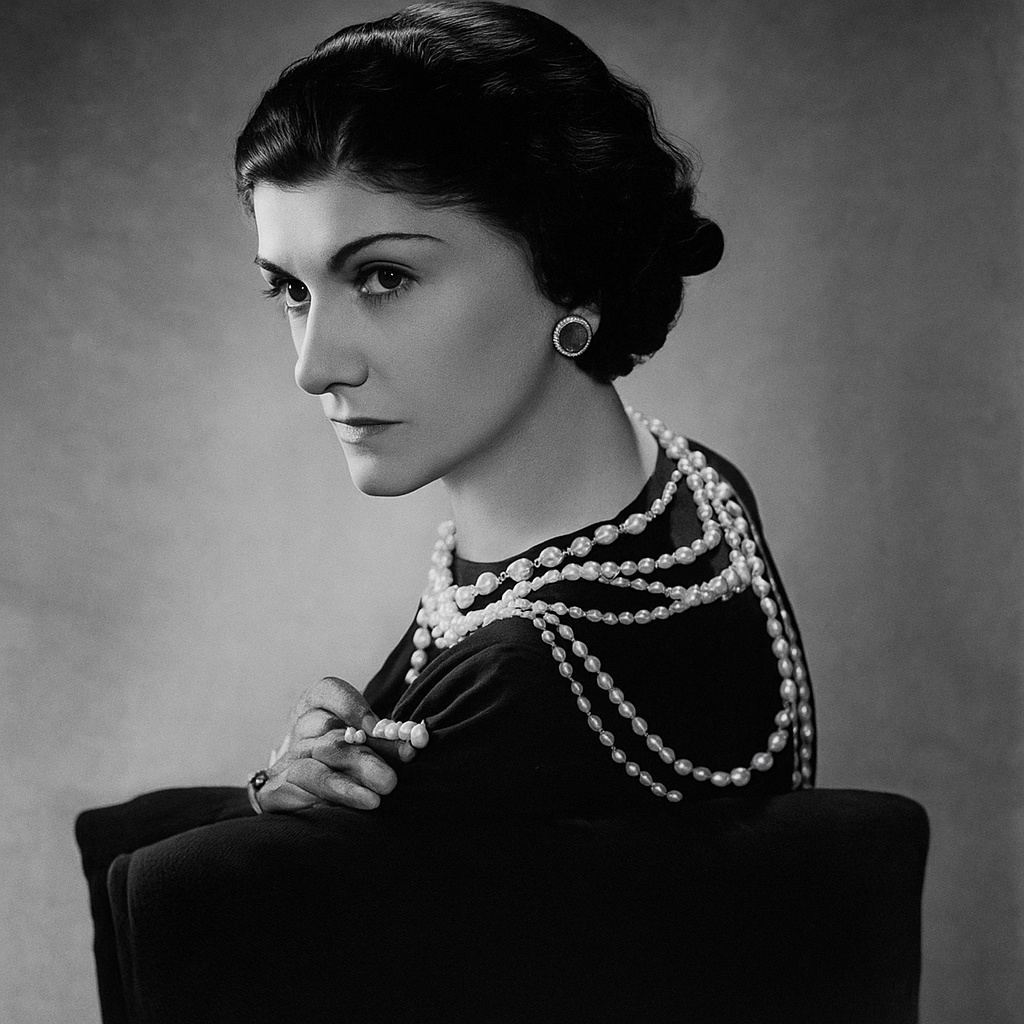
Coco Chanel is one of the most famous names in fashion. Born Gabrielle Bonheur Chanel in 1883, she rose from a poor childhood to create a world famous brand Badges for Bags. She gave women freedom from old clothing rules, created timeless styles, and built a fashion house that still leads the industry.
Her story is not only about success but also about struggle and controversy. Chanel’s designs changed how women dressed, but her life also included difficult choices during World War II. Even today, she is remembered as both a genius designer and a complex figure in history.
Early Life
-
Born: August 19, 1883, in Saumur, France
-
Parents: Albert Chanel and Jeanne Devolle
-
Childhood loss: Her mother died when Chanel was 12 years old
-
Father left: She and her sisters were sent to a convent orphanage
At the convent, she learned sewing from the nuns. She also absorbed the simple, black and white style of the religious uniforms. This early influence shaped her taste for clean lines and minimal designs.
As a teenager, Gabrielle tried singing in cafés. She earned the nickname “Coco” from songs she performed. The name stayed with her forever.
First Steps in Fashion
Coco began working as a seamstress. Later, she started designing hats.
-
1910: She opened her first shop on Rue Cambon in Paris.
-
1913–1915: Expanded to Deauville and Biarritz with boutiques.
Her big change came when she used jersey fabric. At the time, jersey was seen as cheap and used for men’s underwear. Chanel turned it into elegant, comfortable clothing. This bold move gave women fashion that was practical yet stylish.
Chanel’s Fashion Innovations
Chanel believed clothes should allow women to move and live freely. She rejected tight corsets and heavy fabrics. Instead, she created clothing that felt light, modern, and independent.
Her main fashion ideas:
-
Comfort can be stylish
-
Simplicity is elegance
-
Women should dress for themselves, not just for men
-
Luxury does not always mean rich materials—it can mean design
Iconic Creations
1. Chanel No. 5 (1921)
-
First perfume to mix natural and synthetic notes
-
Clean, square bottle design
-
Became one of the best selling perfumes in the world
2. The Little Black Dress (1926)
-
Turned black into a symbol of elegance
-
Affordable, simple, and stylish
-
Still a must have in every woman’s wardrobe
3. The Chanel Suit (1920s, relaunched 1950s)
-
Tweed jacket with matching skirt
-
Inspired by menswear but soft and comfortable
-
Showed power and elegance for working women
4. The 2.55 Handbag (1955)
-
Quilted leather design
-
Shoulder strap so women could keep hands free
-
Practical, stylish, and timeless
5. Costume Jewelry
-
Mixed fake pearls with real stones
-
Made jewelry fun and affordable
-
Changed how women wore accessories
Timeline of Major Events
| Year | Event |
|---|---|
| 1910 | First hat shop in Paris |
| 1913 | Boutique in Deauville |
| 1921 | Launch of Chanel No. 5 |
| 1926 | The Little Black Dress introduced |
| 1939 | House closed at start of WWII |
| 1954 | Chanel returned to fashion |
| 1955 | Launch of 2.55 handbag |
| 1971 | Coco Chanel died in Paris |
World War II Years
Coco Chanel closed her fashion house in 1939. During the war, she lived in the Ritz Hotel in Paris, which was used by German officers.
She became involved with Hans Günther von Dincklage, a German officer. Records suggest she may have worked with the Nazis as an informant. She also tried to use anti Jewish laws to take full control of Chanel No. 5, which was partly owned by the Jewish Wertheimer family.
After the war, Chanel was questioned about her actions. She avoided trial, partly because of her powerful friends, including Winston Churchill. Still, these connections damaged her reputation. She moved to Switzerland for several years.
Return to Fashion
At age 70, in 1954, Chanel returned to Paris and reopened her fashion house. At first, French critics dismissed her work. But in the United States and Britain, her designs were embraced.
Highlights of her comeback:
-
Relaunch of the tweed suit
-
Release of the 2.55 handbag
-
Gained fans like Jackie Kennedy and Grace Kelly
Her comeback proved that her designs were timeless.
Chanel’s Legacy
Coco Chanel’s influence goes beyond clothing.
Lasting Contributions
-
Fashion freedom: Women’s clothing became more practical and comfortable.
-
Timeless style: Her designs are still in demand decades later.
-
Cultural impact: She embodied independence and elegance.
-
Business success: The House of Chanel grew into one of the most powerful luxury brands.
Chanel’s Influence by Category
| Area | Contribution |
|---|---|
| Clothing | Made comfort and simplicity fashionable |
| Perfume | Created Chanel No. 5, a global classic |
| Accessories | Popularized practical handbags and bold jewelry |
| Style Philosophy | Promoted elegance in simplicity |
| Culture | Became a symbol of women’s independence |
Death
-
Date: January 10, 1971
-
Place: Hôtel Ritz, Paris
-
Burial: Lausanne, Switzerland
-
Her grave features lions, her astrological sign (Leo).
After her death, the brand lived on. In 1983, Karl Lagerfeld became creative director and updated the Chanel image while respecting her legacy.
FAQs
1. Who was Coco Chanel?
Coco Chanel, born Gabrielle Bonheur Chanel in 1883, was a French fashion designer who founded the House of Chanel. She is famous for creating timeless styles like the Little Black Dress, Chanel No. 5 perfume, and the Chanel suit.
2. What is Coco Chanel most known for?
She is best known for liberating women from corsets, introducing modern and comfortable clothing, and creating iconic designs such as Chanel No. 5 perfume, the Little Black Dress, and the 2.55 handbag.
3. What is the story behind Chanel No. 5?
Chanel No. 5 was launched in 1921 as the first perfume to mix natural and synthetic ingredients. Its clean design and unique scent made it one of the most popular fragrances in the world.
4. Did Coco Chanel invent the Little Black Dress?
Yes. In 1926, Coco Chanel introduced the Little Black Dress. Before her, black was seen only as a color for mourning. She turned it into a symbol of elegance and timeless fashion.
5. What was Coco Chanel’s role during World War II?
During World War II, Coco Chanel closed her fashion house and stayed in Paris, where she had ties to German officers. Historians believe she may have collaborated with the Nazis, which remains a controversial part of her life.
6. When did Coco Chanel die?
Coco Chanel died on January 10, 1971, at the Hôtel Ritz in Paris. She was 87 years old and is buried in Lausanne, Switzerland.
7. What is Coco Chanel’s legacy today?
Her legacy is timeless. The House of Chanel is still one of the top luxury fashion brands. Her designs continue to inspire modern fashion, and her style philosophy—“simplicity is elegance”—remains influential.
Conclusion
Coco Chanel changed fashion forever. She freed women from restrictive clothes, introduced the Little Black Dress, Chanel No. 5, the tweed suit, and the 2.55 handbag. She proved that elegance could be simple and that luxury could be practical.
Her story is also marked by complexity. Her ties during World War II continue to raise questions. But despite the controversies, her creative vision reshaped modern style and continues to inspire.